Recovery is hard enough. You shouldn't have to do it alone.
Get expert support to make confident recovery decisions, follow through on what you know you need to do and reach full recovery.
If you're reading this, you've probably been trying to recover for a long time. Possibly years. Maybe decades.
You've read the books.
Listened to podcasts.
Followed recovery accounts.
Worked with therapists or dietitians.
Promised yourself that this time would be different.
Sometimes you've made real progress. But somewhere along the way, you've become stuck.
Not because you don't care enough or weren't trying. But because eating disorders are incredibly difficult to recover from without the right support.
That's exactly why I created Seven Health Recovery Coaching.
A programme that combines personalised one-to-one coaching with the wider Seven Health approach, giving you expert guidance, accountability and support as you work towards full recovery.
You can also keep reading to learn more about how the programme works.

Does this sound familiar?
Maybe your life now looks something like this:
Constantly weighing up what feels "safe" to eat.
Second-guessing every meal, snack and recovery decision.
Feeling guilty whenever you rest.
Turning down meals out, holidays or spontaneous plans because they feel too overwhelming.
Wondering whether you're recovering "well enough."
You may know exactly what you “should” be doing. But when it comes to eating more, resting, challenging a fear or letting go of another rule, the eating disorder still seems to have the final say.
And underneath it all is the fear that this might simply be your life.
That no matter how hard you try, you'll never fully escape the eating disorder.
If that feels familiar, you don't have to keep trying to navigate recovery alone.
— A., 35,
“I was exhausted from thinking about food all day. I genuinely believed recovery just wasn’t meant for someone like me.”
Knowing What To Do Isn't The Same As Being Able To Do It
If you've been struggling with an eating disorder for any length of time, there's a good chance you've learned a lot.
You probably know your body needs more food.
You know resting matters.
You know avoiding fear foods keeps the eating disorder alive.
So why is it still so difficult?
Because eating disorders aren't a knowledge problem.
They're an implementation problem.
The hardest moments in recovery aren't when you're reading about what to do.
They're when you're standing in the kitchen deciding whether to add the extra spoonful.
When you've gained weight and your eating disorder is telling you to stop.
When your plans change unexpectedly.
When every part of you wants to fall back into old habits.
That's where recovery coaching makes the difference. Not by giving you more information. By helping you repeatedly choose recovery in the moments that matter most.
— K., 53,
“I wasn't hopeless. I just never had the right kind of support until this."
Recovery takes more than eating more
One of the biggest misconceptions about eating disorder recovery is that it's simply about eating more food.
If only it were that straightforward.
Nutritional rehabilitation is absolutely essential. Without enough food, your brain and body simply can't recover.
But eating disorders aren't maintained by food alone.
They're maintained by fear.
By rigid rules.
By perfectionism.
By anxiety.
By the ways you've learned to cope with difficult thoughts, emotions and uncertainty.
That's why lasting recovery takes more than changing what you eat. It requires a whole-person approach.
At Seven Health, everything we do is built around three core pillars of lasting recovery.
Restore your brain and body
Giving your brain and body the nourishment they need to heal, so recovery no longer feels like you're constantly swimming against the tide.
Build emotional resilience
Developing the skills and confidence to cope with difficult thoughts, emotions and uncertainty without relying on the eating disorder.
Build a life beyond the eating disorder
Creating a life that's bigger, richer and more meaningful than the illness itself, where recovery isn't just about what you're leaving behind, but what you're moving towards.
These three pillars sit at the heart of everything we do.
Your one-to-one coaching.
Our group coaching sessions.
Meal support.
The Fundamentals of Full Recovery programme.
Our recovery community.
Every part is designed to work together, helping you move beyond simply managing your eating disorder towards lasting recovery.
— C., 31,
“I was exhausted from thinking about food all day. I genuinely believed recovery just wasn’t meant for someone like me.”
— R., 46,
For the first time I had ways to deal with feelings that weren’t the eating disorder. That changed everything.”
— T., 38,
“I went to a wedding and actually enjoyed it. No compensating, no panic. I felt like a real person again.”
What's included in Seven Health Recovery Coaching
Seven Health Recovery Coaching combines personalised one-to-one coaching with the wider Seven Health approach, so you're supported every step of the way.

Your dedicated recovery coach
Over five months, you'll work one-to-one with your own recovery coach, creating a personalised recovery plan that's tailored to you, your life and the unique ways your eating disorder tries to keep you stuck.
Together you'll work on:
Physical recovery and renourishment
Eating disorder behaviours and routines
Difficult thoughts, fears and body image
Emotional resilience and coping skills
Recovery challenges as they arise
Building a life beyond the eating disorder
And much more...
Support between sessions
Recovery doesn't stop when your coaching session ends. That's why you'll also have access to message support between sessions, so you don't have to face the difficult moments alone.
Whether you need guidance, encouragement or help navigating a setback, your coach is there to support you.
Group coaching with Chris
Three times each month, you'll join me for live group coaching sessions where we explore the topics that almost everyone encounters during recovery.
Body image.
Fear.
Perfectionism.
Relationships.
Identity.
Setbacks.
Building a meaningful life beyond the eating disorder.
Many people arrive feeling nervous about joining a group. What they usually discover is the opposite of what they expected: relief.
You only ever share what feels comfortable.
Meal support sessions
Our meal support sessions are a chance to eat alongside others in recovery, helping meals become less frightening, more normal and less isolating.
The Fundamentals of Full Recovery
Alongside your coaching, you'll work through our six-module recovery curriculum, giving you practical tools and a deeper understanding of the recovery process.
Topics include:
Physical recovery and renourishment
Working with difficult thoughts and urges
Emotional resilience
Nervous system regulation
Building a meaningful life beyond the eating disorder
The Seven Health community
Recovery can feel incredibly lonely. This community area helps you connect with others who genuinely understand what you're going through, ask questions, celebrate progress and receive encouragement throughout your recovery.
— M., 52,
“The message support was a lifeline. I didn’t have to white-knuckle my way between sessions.”
— J., 24,
“The meal support calls slowly gave me confidence to eat in front of people again.”
— B., 40,
“I never realised how healing it would be to hear other people say things I’d always felt but never spoken.”

Seven Health Recovery Coaching
One Payment
£3,500
Save £625!
Payment Plan
£825
5 monthly payments
A five-month personalised recovery programme combining one-to-one coaching, group coaching, meal support, our recovery curriculum and community.
Meet your recovery coach
Hi, I'm Pamela.
I'm so glad you're here.
I know how frightening recovery can feel because I've been there too.
For multiple decades, my eating disorder consumed my thoughts, my energy and my life. Recovery didn't just change the way I ate. It changed the way I experienced the world.
When you're no longer consumed by constant food thoughts, body image worries and eating disorder rules, you begin to notice all the things that were there all along.
Relationships become richer.
Ordinary moments become meaningful again.
Life feels bigger.
That's why I'm so passionate about this work.
I know recovery isn't simply about stopping behaviours. It's about gently untangling the thoughts, beliefs and patterns that no longer serve you, so you can build a life that feels freer, more connected and more aligned with who you truly are.
My coaching style is warm, compassionate and collaborative. I'll meet you where you are, without judgement.
I'll celebrate your wins, help you navigate the difficult days, and gently encourage you to keep taking the next recovery step, even when the eating disorder feels loud.
Recovery isn't about getting everything right. It's about continuing to move forward. And I'd be honoured to walk alongside you as you do exactly that.
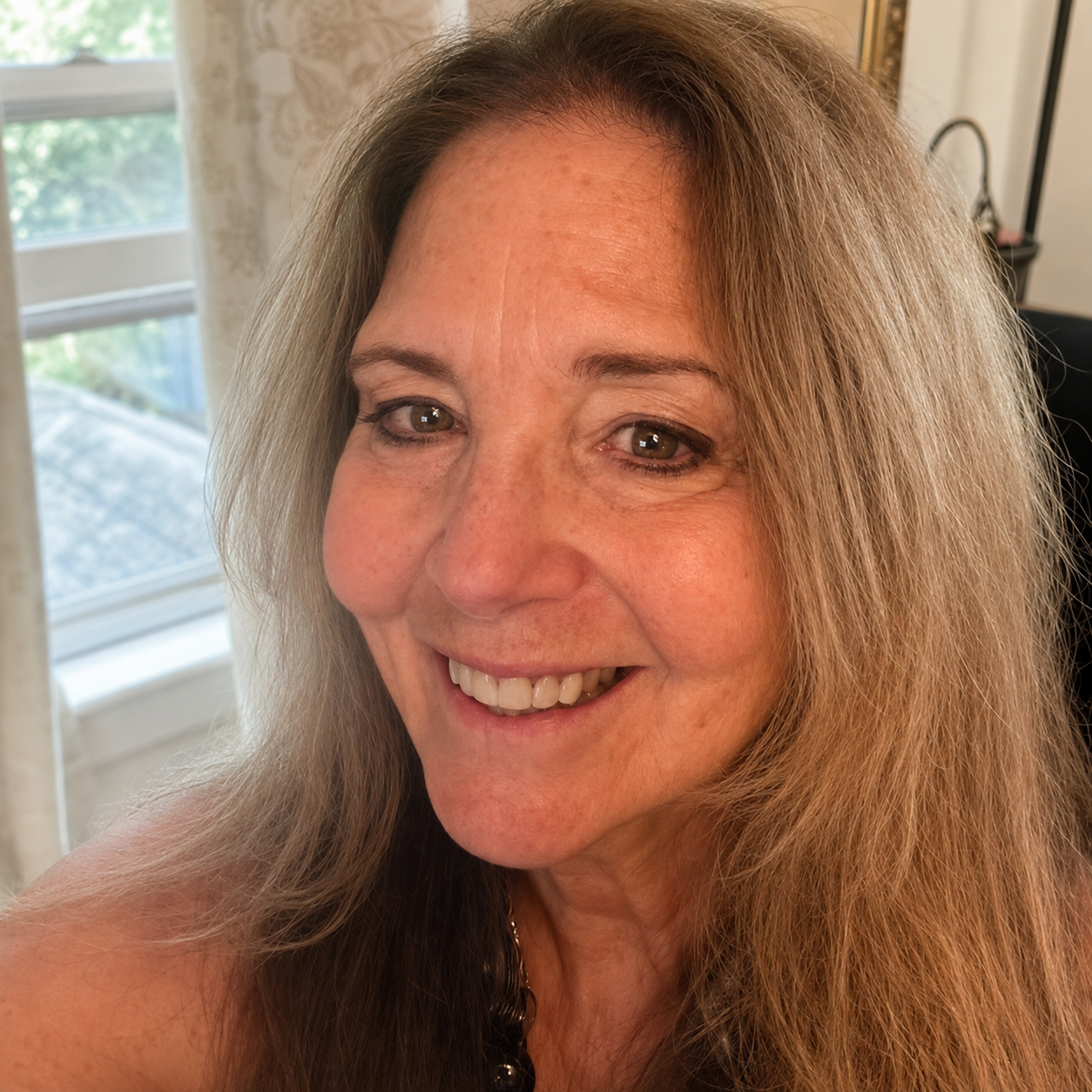
Why I chose Pamela as Seven Health’s first Recovery Coach
For many years, the only way to receive personalised support through Seven Health was to work directly with me.
As more people reached out for help, I eventually reached the point where I simply couldn't say yes to everyone.
But I didn't want to solve that by hiring a coach, handing them our methodology and hoping for the best.
Recovery work is deeply personal. I needed someone who understood not only the principles behind the Seven Health approach, but how to apply them with care, compassion and sensitivity to the person in front of them.
That's why this programme has taken years to create.
Before coaching anyone one-to-one, Pamela spent nine months working alongside me inside our group programme.
During that time, she did far more than learn the material. She saw how the approach works in the reality of recovery: when someone is terrified of gaining weight, struggling to follow through or convinced that one difficult week means they're failing.
She learnt how to offer encouragement, when someone may need gentle challenge and how to keep working towards full recovery without losing sight of the individual.
Pamela isn't there to imitate me. She brings her own warmth, experience and personality to every conversation. But her coaching is firmly grounded in the principles and recovery framework I've spent the last 16 years developing.
She also continues to receive regular supervision from me. This means she isn't working in isolation, and we can think through anything that would benefit from another perspective.
Working with Pamela also doesn't mean losing access to me. You'll continue learning from me through our group coaching sessions and meal support calls, while receiving individual guidance from a coach who knows the details of your recovery.
I know how much courage it can take to ask for help. I wouldn't have opened this programme until I felt confident that the person supporting you would treat your recovery with the care, compassion and seriousness it deserves.
Pamela is that person.
Life beyond the eating disorder
Every person who comes to Seven Health has a different story.
Different ages, different eating disorders and different life experiences.
But they all share one thing in common. At some point, they decided they didn't want the eating disorder to keep making their decisions.
Here are just a few of the people who've used the Seven Health approach to reclaim their lives.
These clients worked directly with me before Seven Health Recovery Coaching existed, but their stories reflect the same approach Pamela has been trained to deliver and now uses in her coaching.
— Julie
Recovered from anorexia after more than 40 years of fear, restriction and weight gain anxiety. Today, life feels freer, calmer and no longer dominated by food or body thoughts.
"I never believed that I would recover. Working with Chris showed me that I was not 'broken' like I had always believed and I started to feel hope that I could break free from the mental prison that had held me captive for decades. What I didn't expect was how much easier it feels to exist in the world without constantly worrying about food, exercise, body 'goals', and numbers."
— Kate
Recovered from an eating disorder rooted in childhood trauma and now works as a therapist, helping others heal.
"I would not have been willing to do any of the work I have done this year if I did not believe in Chris' guidance. There are not enough people doing what he is doing – prioritising health over appearance and over the ability to make a profit by selling people ways to achieve the appearance they want."
— Henry
Went from compulsive exercise and constant food thoughts to a life where food is simply food and the eating disorder no longer runs the show.
"One of the great things about coming out of something like this is everything else in life becomes much easier. Because you can always compare it to either when you were sick or when you were recovering. So when everything is falling apart around me, I can always think to myself, 'At least I'm not back there again.' It's such a relieving thought."
— Jenny
Recovered from years of binge eating and discovered healthier, more compassionate ways of coping with anxiety and difficult emotions.
"For years I thought bingeing was the problem, when really it was how alone and overwhelmed I felt. Through this work, I learned how to meet my anxiety and emotions with compassion instead of fear. What surprised me most was how much of myself came back — friendships, creativity, and a sense of connection to myself that I thought I'd lost for good. I feel steadier now, and more at home in this stage of my life than I ever imagined I could."

Is Seven Health Recovery Coaching right for you?
This programme is likely to be a good fit if:
You've been living with an eating disorder for years or decades and you're ready for something to change.
You're tired of trying to recover on your own.
You know what you "should" be doing, but struggle to put it into practice consistently.
You want personalised support, accountability and guidance as you work towards full recovery.
You're willing to take recovery steps, even if it feels frightening.
Part of you is scared, but another part knows you don't want to keep living like this.
You don't need to feel completely ready. You don't need to believe recovery will be easy. You only need a small part of you that's willing to keep moving forward.
We'll help the rest grow.
Ready to take the next step?
If Seven Health Recovery Coaching feels like the support you’ve been looking for, complete the application below and tell us a little about where you’re currently at.
Frequently Asked Questions
Who will my recovery coach be, and how has she been trained?
Will I work directly with Chris?
Is this enough support if I’ve struggled for years?
What happens during one-to-one coaching?
What support will I receive between sessions?
Do I need a diagnosis, and which eating-disorder patterns can you support?
Can I join alongside therapy or other professional support?
How will my information be used, and who will have access to it?
Will I need medical monitoring?
Is this suitable if I’m neurodivergent?
Will I have to stop exercising?
What if I’m terrified of eating more or gaining weight?
What if I miss a session or struggle to keep up?
Do I have to talk or share personal information during the group sessions?
What happens if I experience a setback?
What happens after the five months?
How do I know whether this is the right level of support for me?
You don't have to be completely ready.
You don't need every part of you to want recovery. In fact, almost everyone who starts feels frightened, uncertain or ambivalent.
You only need a small part of you that's tired of living this way. A part that's curious about whether life could be bigger than the eating disorder.
If that's you, I'd love to invite you to apply for a Recovery Strategy Call.
We'll spend time understanding your situation, answering your questions, and working out together whether Seven Health Recovery Coaching is the right fit.
If it is, wonderful. If it isn't, I'll tell you that too.
You'll never be pressured into joining. Because finding the right support is far more important than joining the wrong programme.