Full recovery is possible – even after decades of living with an eating disorder
For people who are done with quasi-recovery, constant relapse, and living a “half-life” — and who are ready to be guided, step by step, into full recovery.
If you’re reading this, you’ve likely been living with an eating disorder for a long time.
Maybe years. Maybe decades.
You’ve tried to "fix it." You’ve read the books, done therapy, worked with dietitians, followed recovery accounts, maybe even done inpatient or outpatient treatment… and some things helped for a while, but nothing truly stuck.
Part of you still believes full recovery might be possible.
Another part of you is exhausted, sceptical, and scared to hope again — scared you’ll fail again, scared you’ll invest emotionally and financially and end up back in the same place.
That fear is normal.
It’s not a sign you're not ready. It’s a sign you’re human, and you’ve been carrying this alone for a long time.
The Transformational Recovery Method (TRM) is the programme I created for this exact moment — when you’re tired of living like this, tired of doing it alone, and ready to be properly supported into full recovery.

Does this sound painfully familiar?
You’ve been living with some version of an eating disorder for a long time. It might look like:
- Decades of restriction, over-exercise or “being good” with food… punctuated by binges, panic and shame.
- Planning every meal, every snack, every social event around what the eating disorder will or won’t “allow.”
- Tracking, counting, negotiating, compensating – feeling like your brain never gets a break.
- Knowing so much about recovery in theory… yet somehow being unable to consistently do the things you know would help.
- Feeling like you’ve “failed” treatment – or that treatment has failed you.
- Watching your life get smaller: avoiding trips, meals out, rest days, intimacy, spontaneity, joy.
And underneath:
- A quiet grief for the years already lost.
- A fear you’ll still be dealing with this in your 40s, 50s or 60s.
- A belief that maybe you can’t recover.
- A small, stubborn part of you that still wants more for your life.
If you’re reading this thinking “yes… that’s me,” you’re exactly who I created TRM for.
— A., 35
“I was exhausted from thinking about food all day. I genuinely believed recovery just wasn’t meant for someone like me.”
— L., 28
“Every day felt the same. Restrict, panic, binge, shame. I thought this was simply my life now.”
The truth about doing “just enough” to cope
Most people I work with aren’t doing nothing.
They’re doing just enough to get by.
Just enough eating to survive.
Just enough flexibility to appear “fine.”
Just enough coping to function… but not enough to truly change.
But over months and years, “just enough” becomes:
A body that never feels safe or fully nourished.
A constant undercurrent of anxiety and looping thoughts.
Using the eating disorder to cope with everything: fear, stress, grief, relationships.
A shrinking life defined by avoidance and limitation.
A sense of living a half-life while everyone else gets to participate fully.
One client described the realisation like this:
“I didn’t expect this to still be going on in my 20s… then in my 30s… then in my 40s and 50s.”

— J., 51
“I didn’t realise how small my life had become until I started trying to get it back.”
Full recovery is possible — even for you
At Seven Health, we hold one very clear belief: Full recovery is possible for everyone.
Not partial recovery.
Not symptom management.
Not “as good as it gets.”
Full recovery.
I’ve been doing this work for over 15 years, supporting people who genuinely believed they were too far gone, too old, too stuck, too traumatised, too anxious and too “different.”
And yet… they recovered.
If this is what you want, and you want to stop cycling through partial-recovery attempts and relapses, we can help you get there.
— S., 49
“I honestly didn’t believe full recovery was possible for me… until I worked with Chris.”
It’s not that you haven’t tried. It’s that the support didn’t match what you needed.
You’ve already tried so much:
Therapy — helpful for understanding why you struggle, but not enough structure to change eating or movement.
Dietitians — sometimes too focused on numbers or weight, without the emotional tools you need.
Inpatient/outpatient — environments where you improve, only to fall apart when real life returns.
Books, worksheets, online accounts — helpful until overwhelm or fear kicks in.
Willpower — which works for a day or a week… until it collapses.
This isn’t because you’re unmotivated. It isn’t because you “can’t do it.” And it absolutely isn’t because you’re broken.
Eating disorders are biopsychosocial — they affect your body, brain, nervous system, emotions and your entire life.
If treatment only addresses one part, the eating disorder adapts and survives.
TRM works because it supports all three pillars at the same time, in real life, with structure and compassion.
— E., 34
“I’d done therapy, dietitians, inpatient programmes… nothing stuck. TRM was the first thing that actually changed my day-to-day life.”
— K., 53
“I wasn’t hopeless — I just never had the right kind of support until this.”
Imagine your life five months from now… and beyond
Pause for a moment and picture a future where the eating disorder isn’t steering everything. A life where:
- You wake up without fear, guilt or negotiation already running in the background.
- Food is just food.
- You can eat enough, consistently, without spiralling into panic or compensation.
- Movement becomes flexible and enjoyable again — not rigid or compulsory.
- Rest no longer feels like failure.
- Stress happens, and you have real tools — not the eating disorder.
- Social events no longer require meticulous planning or avoidance.
- You can say “yes” to your life instead of shrinking from it.
And maybe most strikingly: You feel like yourself again. Or perhaps for the first time.
This is what full recovery makes possible: Freedom. Self-trust. Stability. Ease. Presence. Joy. Capacity for a full, rich life.
If imagining this brings up fear — that’s normal. Fear doesn’t mean you’re not ready. It means you’re on the edge of something important.

— H., 38
“Five months ago, I couldn’t eat a sandwich without panicking. Last week I went out for dinner with my daughter and enjoyed it.”
— P., 29
“Food is just food now. The noise is gone. I feel present in my life in a way I didn’t know was possible.”
— D., 47
“I didn’t realise how deeply I wanted my life back until I started getting glimpses of it again.”
How TRM guides you into full recovery
Recovery requires three things. Most approaches give you only one. TRM gives you all three — consistently, compassionately and in real life.

PILLAR 1 — Physical repair and renourishment
Eating disorders leave the body in a chronically low-energy state. This affects your:
- Thoughts
- Mood
- Perception of your body
- Anxiety
- Ability to cope
- Capacity to make rational, grounded choices
Without enough nourishment, recovery is Groundhog Day — the same thoughts and fears on repeat. Inside TRM, you receive support to:
- Eat enough, consistently
- Reduce or modify compulsive exercise safely
- Understand what’s happening in your body
- Navigate fear, guilt and uncertainty around nourishment
- Stabilise your body so your mind can heal
If you’re terrified of weight gain, you’re not alone. You never have to pretend this fear doesn’t exist.
We support you through it gradually and compassionately, with real tools for coping. Weight is not the measure of success. Freedom is.
— C., 31
“Once I was actually eating enough, the thoughts got quieter. I didn’t realise how much my brain had been starving.”
PILLAR 2 — Emotional resilience and coping skills
Eating disorders are anxiety disorders. At their core, they help you avoid:
- Fear
- Uncertainty
- Emotions
- Conflict
- Rest
- Needs
- Vulnerability
Over time, the eating disorder becomes your main coping mechanism. Inside TRM, you learn:
- How to practise exposure in a supported, structured way
- Tools for emotional regulation
- How to stay with discomfort long enough for change to happen
- How to interrupt spirals and urges
- How to cope with life in ways that don’t involve the eating disorder
If you’re scared you’ll fail again, that is normal. Recovery doesn’t require perfection — it requires support.
You don’t need full confidence. We help you build the capacity to do the things the eating disorder tells you you can’t.
— R., 46
“For the first time I had ways to deal with feelings that weren’t the eating disorder. That changed everything.”
PILLAR 3 — Bringing life back into your life
Recovery doesn’t happen in a cocoon or a vacuum. It happens in your real life — with all its messiness, unpredictability and opportunity for connection and meaning. We help you:
- Reclaim experiences you’ve been avoiding
- Build a life that pulls you toward recovery
- Reflect on what went well and what didn’t
- Deepen relationships
- Expand your world beyond the eating disorder’s rules
Every person who joins TRM arrives believing their situation is uniquely complicated — too old, too stuck, too anxious, too traumatised, too different.
And every person discovers that the core patterns keeping them stuck are absolutely workable with the right structure and support.
— T., 38
“I went to a wedding and actually enjoyed it — no compensating, no panic. I felt like a real person again.”
Real stories of full recovery
Here are just a few people who have been through TRM and seen their lives drastically change for the better.
Julie — who recovered from anorexia in her 50s after 40+ years of fear, restriction, and terror around weight gain. Her recovery unfolded slowly and steadily as she learned to trust her body again, honour her hunger, and release decades of shame. Today, she is a fierce advocate for recovery and how much easier life feels without the constant vigilance that once ruled every day.
"I never believed that I would recover. Working with Chris showed me that I was not "broken" like I had always believed and I started to feel hope that I could break free from the mental prison that had held me captive for decades. What I didn't expect was how much easier it feels to exist in the world without constantly worrying about food, exercise, body "goals", and numbers."
Kate — who was in her 20s and had used her eating disorder to cope with a childhood of upheaval, neglect, and abuse — is now fully recovered and working as a therapist helping others to heal. Her journey showed her that healing can happen even during the most challenging of circumstances. She rebuilt her sense of safety, worth, and identity from the inside out. Now she brings that lived wisdom into her work, offering the compassion she once needed.
"I would not have been willing to do any of the work I have done this year if I did not believe in Chris’ guidance. There are not enough people doing what he is doing – prioritising health over appearance and over the ability to make a profit by selling people ways to achieve the appearance they want."
Henry — who went from compulsive exercise and constant food thoughts to food just being food, a transformed relationship with movement, and a life that finally feels simpler because the eating disorder is no longer running the show. He describes recovery as finally being able to relax — to choose rest without guilt, to be present with the people he loves, and to feel at home in himself again. His days are no longer dictated by numbers, rules, or fear.
"One of the great things about coming out of something like this is everything else in life becomes much easier. Because you can always compare it to either when you were sick or when you were recovering. So when everything is falling apart around me, I can always think to myself “At least I’m not back there again.” It’s such a relieving thought."
Jenny — who began bingeing in her 40s to cope with her children leaving home — hasn’t binged in years and now has healthier, more compassionate ways of dealing with anxiety and strong emotions. Through recovery, she rediscovered parts of her life she’d put on hold, including friendships, creativity, and her own needs. She says she now feels more connected to herself than she has in decades.
"For years I thought bingeing was the problem, when really it was how alone and overwhelmed I felt. Through this work, I learned how to meet my anxiety and emotions with compassion instead of fear. What surprised me most was how much of myself came back — friendships, creativity, and a sense of connection to myself that I thought I’d lost for good. I feel steadier now, and more at home in this stage of my life than I ever imagined I could."
What you receive inside TRM
This is a high-support, high-touch, five-month programme for people who are ready to stop cycling through partial recovery and finally create full, lasting change.

Regular 1:1 sessions
Deep, personalised sessions where we focus on:
- your physical recovery
- your emotional patterns
- your coping strategies
- your fears and thoughts
- your food and movement behaviours
- the life you want to build
We create a plan from session one — not a generic template, but a roadmap specific to you.

Message support between sessions
You never have to sit in fear alone. You can reach out when:
- You’re spiralling
- You’re stuck
- You’ve had a win
- You need coaching through a difficult moment
- You need help regulating
- You need reassurance or direction
A huge part of recovery happens between sessions — and so does our support. You do not have to overhaul your entire life at once.
Everything is paced, structured and designed to reduce overwhelm, not create it.

Community support area (private group space)
You’ll also have access to a private community space where you can share updates, ask questions, and receive guidance between calls.
Many people find this one of the most reassuring parts of the programme — being connected to others who genuinely understand what it’s like to live with an eating disorder.
It’s a gentle, supportive environment where you can get clarity, celebrate wins, and receive encouragement from me, the team, and others in TRM. You never have to do this alone.

Group coaching calls
A warm, compassionate space where you can process:
- Grief
- Fear
- Frustration
- Shame
- Comparison
- “I should be better by now” thoughts
- Ambivalence
Many people feel nervous about groups at first. What they discover is that being with others who truly understand creates relief, not comparison.
You share only what you want. The space is gently held and deeply supportive.

Meal support calls
Think of these as a virtual café. We sit together, eat together, talk like humans — and practise food in real time.
For many clients, these sessions are where eating becomes easier and less loaded.

The Fundamentals of Full Recovery
A six-module course you use alongside coaching. It helps you understand:
- What’s happening in your body
- How to regulate your nervous system
- How to work with thoughts and urges
- Emotional resilience
- The psychology of recovery
- How to bring life back into your life
It's practical, not academic — focused on the things that actually create change.

— M., 52
“The message support was a lifeline. I didn’t have to white-knuckle my way between sessions.”
— J., 24
“The meal support calls slowly gave me confidence to eat in front of people again.”
— B., 40
“I never realised how healing it would be to hear other people say things I’d always felt but never spoken.”
Is TRM right for you?
TRM is for you if:
- You’ve been struggling with an eating disorder for years or decades.
- You want full recovery — not coping, not symptom management, not “good enough.”
- You want deep, structured support that addresses your body, your emotions and the patterns that keep you stuck.
- You’re willing to take uncomfortable steps when supported and guided.
- Part of you is scared — and part of you genuinely wants your life back.
- You recognise that you need support that works with your nervous system, not against it.
You don’t need to feel fully ready. Ambivalence is part of every recovery process.
You only need one small part of you that doesn’t want to live like this anymore. We’ll work with that part — gently, skillfully and at your pace.
TRM is not for you if:
- You want weight-loss or body-change coaching.
- You want things to feel a bit better, but not truly transform.
- You’re unwilling to change your eating or movement patterns.
— L., 36
“I’d been struggling for 20 years and never thought I’d be a ‘full recovery’ person. Turns out I was wrong.”
Who I am, and why I do this work
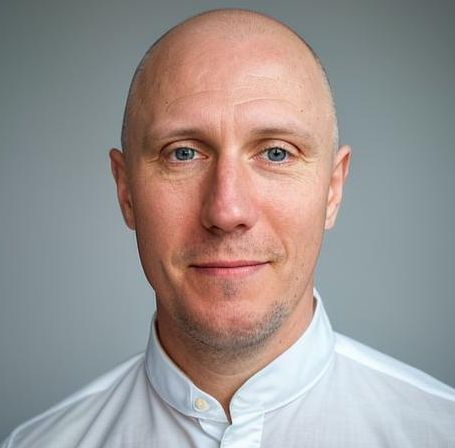
I’m Chris Sandel — a nutritionist, coach and eating disorder specialist, and the founder of Seven Health.
For more than 15 years, I’ve supported people through some of the darkest and most exhausting moments of their lives, helping them move from long-term eating disorders into stability, nourishment, trust, freedom and joy.
My work is grounded in:
- compassion
- nervous system understanding
- evidence-informed practice
- deep experience with complex, long-term cases
- a belief that everyone can fully recover
Some of the people I work with are also neurodivergent — ADHD, Autism, High Sensitivity, and OCD patterns. These traits often shape how their eating disorder developed and how recovery needs to be approached.
Because of this, my work adapts to your brain, your nervous system and your capacity. There is no one-size-fits-all plan here — recovery needs to be personal, attuned and paced.
Some members of the Seven Health team have lived experience with eating disorders themselves.
They know what it’s like to feel trapped, hopeless, terrified of letting go, or ashamed of not being able to “just fix it.”
We do this work because everyone deserves a life that is bigger than their eating disorder.
— K., 47
“Chris understood things about my eating disorder I had never been able to explain to anyone.”
— F., 39
“Working with Chris felt safe. I felt seen, understood and led — without pressure.”
The Transformational Recovery Method™
The Transformational Recovery Method is a high-support, high-touch programme.
The investment is:
Pay In Full
£5,500
Save £1,000!
Payment Plan
£1,300
5 monthly payments
A decision like this can feel overwhelming — especially if you’ve invested in recovery before and felt disappointed or let down.
It’s normal to worry about investing in yourself when things haven’t worked in the past. We will talk openly during the call about whether TRM is the right fit, the right timing, and the right level of support for you.
You will never be pressured into anything. The decision must feel grounded, supported and aligned.
You don’t have to do another year like this. Here's what to do next:
1. Apply for TRM
Click the button below and answer a few short questions.
2. We talk
A gentle conversation about where you are, what you’ve tried, what you want, and what’s getting in the way.
3. You decide — with support, not pressure
If it feels like a good fit, we’ll talk through next steps. If not, I’ll guide you toward what is right for you.