You don’t need more insight. You need structure.
Because recovery is hard and doing it alone is harder.
The Fundamentals of Full Recovery is built to change that.
If you’re reading this, part of you already knows something needs to change.
You’re tired of the cycle.
Restricting.
Bingeing.
Guilt.
Fear.
Promises that don’t hold.
You’ve thought about recovery.
Maybe tried before.
And somehow you’re back here.
Not because you’re weak.
But because insight alone doesn’t create change.
Maybe you’ve been doing this alone.
Or maybe you’ve had support (therapy, a professional, a programme) and while it helped in some ways, it didn’t get you where you want to be.
You understand more.
But you're still struggling.
And you’re not fully recovered.
You don’t need to be convinced that recovery matters.
You need a way to actually do it — with structure, direction, and people who understand what this really takes.
That’s what The Fundamentals of Full Recovery is designed for.
You can also keep reading to learn more about how the programme works.

— L., 36
“I stopped cancelling plans because of food fear and started making plans without worrying about eating first.”
— J., 42
“I can eat socially again. Lunch with friends, dinners out, travel, all without anxiety deciding everything.”
With the right structure, consistent action, and enough time, full recovery is inevitable.
When recovery is built properly, what feels impossible right now becomes normal.
Imagine this.
You wake up and food isn’t already running in the background of your mind.
You eat because you’re hungry — not because you’ve negotiated it, delayed it, or earned it.
You finish a meal and move on.
No spiral.
No mental maths.
No compensation plan for later.
Your energy stretches further into the afternoon.
Your brain feels clearer.
You’re not constantly managing urges, rules, or guilt.
You make plans without calculating around food.
You travel.
You rest.
You change your routine.
And nothing falls apart.
Hard emotions still happen but they don’t automatically turn into restriction.
Weight changes don’t define your worth.
You trust yourself around food.
You trust your body.
You trust that you can cope.
This programme is designed to build recovery from the foundations up.
Consistent nourishment.
Guided exposure.
Real-time support.
Clear direction.
When the right structure is in place, recovery stops feeling theoretical. It becomes lived. And lived recovery compounds.

— A., 41
“I stopped restricting after tough thoughts and started eating meals without compensation.”
— C., 29
“I can step back from fear and instead make choices aligned with recovery in the moment.”
Everything you need to build recovery properly.
The Fundamentals of Full Recovery is a structured, group-based recovery programme designed to help you build full recovery in a way that actually lasts.
Whether you’re at the beginning or have been circling recovery for years, this programme is designed to move you forward.
The structure is clear, practical, and intentionally designed to reduce overwhelm. A number of people in this programme have ADHD, autistic traits, sensory sensitivities, or demand-avoidant patterns. Recovery support needs to account for that — and this one does.
The programme begins with a three-month commitment — a starting point designed to stabilise nourishment, retrain patterns, and build foundations that hold. Many people choose to continue beyond this, but three months gives you the structure and momentum to begin properly.
Working step by step through the programme, you’re guided through the physical, psychological, and behavioural foundations of recovery — with live coaching, meal support, modules covering all aspects of recovery and a clear roadmap so you’re not figuring it out alone.
This isn’t just education.
It’s supported implementation.
You stabilise nourishment.
You practise exposure.
You build resilience.
You apply the work in real time, with accountability and support.
It’s the difference between trying to recover — and building recovery properly.
And here’s exactly what’s included:

The Fundamentals Programme
Eating disorders aren’t just about food or the stereotypical behaviours people focus on. They’re about energy, fear, coping, identity, and the structures you live inside.
So we address all of it and do so in the right order.
You move through:
Understanding the root drivers of eating disorders
Because willpower isn’t the problem. We unpack how anxiety, perfectionism, control, trauma, and coping patterns keep the cycle alive — so you stop blaming yourself and start changing the right things.
Repairing energy and restoring physical stability
Because a depleted body keeps your brain stuck in survival mode. You learn how nourishment restores clarity, reduces obsession, and creates the stability recovery depends on.
Building psychological resilience
So when intrusive thoughts, urges, or fear spike, you don’t collapse back into old patterns. You learn how to respond differently — even when your mind is loud.
Developing emotional resilience
Grief. Fear of weight gain. Body image distress. Anger. Shame. Instead of suppressing emotion or managing it through restriction, exercise or other eating disorder behaviours, you build the tools and capacity to feel without self-destructing.
Strengthening connection resilience
Boundaries. Relationships. Trauma history. Identity. Meaning. Recovery isn’t just stopping behaviours; it’s building a life that feels safe and worth staying present for.
Creating structural resilience in daily life
Fear foods. Flexibility. Routines. Travel. Relapse prevention. Your environment and habits are reshaped to support recovery long term — not sabotage it.
Group Coaching Calls
A safe, professionally guided space to bring what you’re actually struggling with — thoughts, fears, patterns, real-life situations — and work through them in real time.
Sometimes that means direct, strategic guidance.
Sometimes it means saying the thing you’ve never said out loud — and feeling understood without judgement.
This isn’t a peer-led support group. It’s structured coaching grounded in over 15 years of clinical experience and work with hundreds of clients in recovery.
Many people come into this programme wary of group spaces — especially if they’ve had difficult experiences in inpatient or poorly facilitated settings.
When eating disorder groups are uncontained, they can reinforce comparison, competition, or unhelpful behaviours.
That’s not what happens here.
These calls are intentionally facilitated to support recovery. Harmful spirals are interrupted. Eating disorder logic is named clearly. The focus stays on forward movement.
The group includes women from their early 20s through to their 50s — some at the beginning of recovery, others much further along. That range isn’t chaotic; it’s powerful. You see what’s possible. You realise you’re not alone. You learn from lived experience at different stages.
Calls typically centre on shared themes such as:
- Navigating fear or grief around body changes
- Handling diet or weight conversations
- Working with urges to restrict, over-exercise, or compensate
- Learning to rest or eat more without spiralling
The tone is grounded, honest, and practical.
You’ll be supported.
You’ll be understood.
And when needed, you’ll be gently challenged.
Meal Support Calls
A virtual café.
We sit together.
We eat together.
We practise nourishment in real time.
You show up as you are.
Eating becomes something you experience with others — not something you manage alone.
This is where nourishment shifts from theory to lived experience — and the brain learns that recovery is safe.
Office Hours
A regular space for direct, grounded guidance on whatever feels hardest right now.
Instead of guessing or spiralling, you get clarity.
You understand where you are in the recovery process — and what the next right step is.
There will still be discomfort.
But it won’t be chaotic.
You’ll know what to focus on.
You’ll know what to practise.
And you won’t be doing it alone.
Private Community Space
A calm, thoughtful space to ask questions and connect with others who understand the internal reality of recovery.
You can speak openly about what’s happening, even the messy, confusing parts.
You can participate actively — or simply read and absorb until you’re ready.
Connection replaces isolation.
This isn’t just support. It’s containment while you build a new way of living.
— S., 33
“I’m eating consistently, resting without guilt, and handling everyday stress without spiralling.”
— E., 28
“I can go out, work full days, and manage stress without food thoughts consuming me.
Life became doable instead of impossible.”
Does this feel familiar?
You think about food more than you try to let on.
Planning.
Calculating.
Negotiating, even when you call it “flexible.”
Eating feels loaded.
Too much feels dangerous.
Too little feels safe — even when it’s costing you.
You tell yourself you’ll rest later.
Slow down later.
Stop later.
But sitting still makes you anxious.
Missing movement feels unbearable.
Control feels safer than letting go.
You hold it together...
...until it leaks out as exhaustion, irritability, brain fog,
or eating you didn’t plan for.
You fear eating more.
You fear losing control.
And you’re quietly afraid of what happens if nothing changes.
Whether you’ve been alone or supported in ways that never quite met you...
...you’ve been carrying this largely by yourself.
Underneath all of it, there’s a truth you keep coming back to:
I don’t want to live like this anymore.
That part of you matters.
That part of you is why this programme exists.
— E., 27
“I can move through difficult moments without days of restriction or panic.”
— M., 25
“Eating meals and snacks just feels normal now.”
— T., 39
“The group calls saved me so many times.
I finally had somewhere to share what was going on.”

Recovery requires more than motivation.
Most people don’t get stuck because they aren’t trying.
They get stuck because the conditions for change aren’t in place.
Trying harder isn’t the solution.
It requires:
- A body that’s consistently nourished
- A brain that isn’t locked in threat
- Support that turns insight into action
- Exposure that’s guided — not avoided
- Space to face fear without collapsing into it
When the body is underfed, movement feels compulsory, rest feels unsafe and thinking becomes rigid and obsessive...
...no amount of willpower overrides that.
Recovery doesn’t happen through force. It happens when the right conditions are in place — consistently, deliberately, and with guidance.
That’s why trying harder hasn’t worked.
And it’s why this programme is designed the way it is.
— R., 47
“I respond to anxiety differently now. I don’t shut down, restrict, or over-exercise when fear spikes.”
— N., 31
“I now talk about hard moments openly and stay present through them instead of isolating.”
Eating disorders aren’t about willpower.
They’re about biology, fear, and learned patterns that feel automatic.
The Fundamentals works because it creates the conditions recovery actually requires — in lived experience, week after week.
This is how change actually happens.

You understand what’s happening and respond differently
Fear softens when you understand your thoughts, urges, and body responses.
But understanding alone doesn’t create change.
We don’t think our way into acting differently.
We act our way into thinking differently.
Inside the Fundamentals, clarity is paired with action.
You practise responding to fear in real time — with guidance — so your brain can learn that change is safe.
Change happens through experience. Not effort.
Change happens through experience — not effort or self-control.

Community dissolves shame and reduces panic
Hearing someone else describe your exact thoughts changes something.
You stop believing you’re broken.
You stop interpreting fear as failure.
You recognise your reactions for what they are — human.
Recovery becomes something you practise with others, not something you hide.

Support interrupts spirals before they take over
Instead of losing days or weeks to restriction or overthinking, you bring what’s happening into the open as it’s happening.
Through coaching and community, you learn to move through difficulty — not avoid it, suppress it, or collapse under it.

You practise recovery in real time — not just in your head
Meal support and structured tools create a lived experience.
You practise eating with support.
You practise staying present through fear.
You practise resting and choosing differently.
This is how the brain learns that recovery is not dangerous.

You focus on what actually moves the needle
Instead of trying to fix everything, you work on the right things at the right time.
There will still be discomfort.
But it won’t be chaotic.
You’ll know what to focus on.
You’ll know what to practise.
And you won’t be doing it alone.
Steady, grounded steps build trust — in your body, your mind, and the recovery process itself.

Recovery becomes integrated
At first, recovery feels effortful.
Over time, it becomes responsive.
You don’t fight every thought.
You don’t brace for every meal.
You don’t negotiate every decision.
Recovery becomes something you’re living —
not something you’re forcing.
And your life begins to expand beyond food, exercise and the eating disorder.

— M., 32
“I can rest without guilt now. Sleep, relaxation, and stillness don’t trigger panic responses anymore.”
— A., 43
“I can travel without packing ‘safe’ foods or negotiating meals. I actually enjoy the holiday now.”
Who I am, and why I do this work
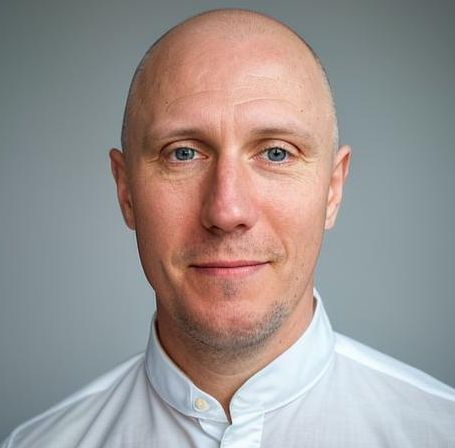
I’m Chris Sandel — a nutritionist, coach and eating disorder specialist, and the founder of Seven Health.
For more than 15 years, I’ve supported people through some of the darkest and most exhausting moments of their lives, helping them move from long-term eating disorders into stability, nourishment, trust, freedom and joy.
My work is grounded in:
- compassion
- nervous system understanding
- evidence-informed practice
- deep experience with complex, long-term cases
- a belief that everyone can fully recover
Some of the people I work with are also neurodivergent — ADHD, Autism, High Sensitivity, and OCD patterns. These traits often shape how their eating disorder developed and how recovery needs to be approached.
Because of this, my work adapts to your brain, your nervous system and your capacity. There is no one-size-fits-all plan here — recovery needs to be personal, attuned and paced.
Some members of the Seven Health team have lived experience with eating disorders themselves.
They know what it’s like to feel trapped, hopeless, terrified of letting go, or ashamed of not being able to “just fix it.”
We do this work because everyone deserves a life that is bigger than their eating disorder.
— F., 24
“I returned to hobbies I dropped, like poetry, drawing, and watching films. Things the eating disorder had stolen from me.”
— J., 39
“I can eat out with friends without planning every menu item first. I actually enjoy meals again.”
This programme is for you if:
You’re tired of trying to manage this alone.
You want structure — not more information.
You’re ready to practise recovery, not just think about it.
You’re willing to engage honestly — especially when it’s uncomfortable.
You want clarity on what to focus on next, instead of trying to fix everything at once.
You want recovery to feel deliberate and workable — not chaotic or mysterious.
You may be early in recovery, returning after a setback, or stabilising long-standing patterns.
And importantly:
This programme is suitable for neurodivergent individuals — including ADHD, autism, OCD tendencies, and sensory sensitivities.
The structure is designed to reduce overwhelm, provide predictability, and support nervous system regulation.
— K., 30
“As someone with ADHD, the structure helped me in a way nothing else ever did.
I wasn’t overwhelmed — I was supported.”
This programme is not the right fit if:
You are currently in an acute medical or psychological crisis.
You require daily monitoring, intensive clinical care, or crisis-level support.
You are seeking weight-loss coaching or body-altering outcomes.
You are unable to eat at all without direct, in-person support.
You require intensive 1:1 treatment beyond the scope of a structured group-based programme.
The Fundamentals of Full Recovery is designed to build stability and guide sustainable recovery.
It is not a replacement for higher-level medical or psychiatric care when that level of support is required.
If you’re unsure about fit, you’re welcome to reach out with questions before joining.
You can contact us at info@seven-health.com.
— H., 35
“I wasn’t ready for intensive support, but I needed more than doing it alone.
Fundamentals was the perfect middle ground.”

Begin The Fundamentals of Full Recovery.
The Fundamentals of Full Recovery is a structured, group-based recovery programme.
Your initial commitment is three months.
After the initial three months, you can continue month-to-month if ongoing support would be helpful.
There is no requirement to commit beyond the first three months when you join.
— S., 44
“This was the first time I invested in myself that actually felt worth it.
Piece by piece, I started getting my life back.”
Frequently Asked Questions
Is this enough support if I’ve struggled for years?
Do I need a diagnosis to join?
Is this suitable for restrictive eating, bingeing, compulsive exercise, bulimia, or mixed patterns?
Is this suitable if I’m neurodivergent (ADHD, autism, OCD tendencies, sensory sensitivities)?
Do I have to stop exercising?
Is this just educational content?
What if I miss calls or fall behind?
Do I have to share everything in the group?
Is this a replacement for therapy?
Can I stay longer than the initial three months?
What if I need more support than this?
How do I know if this is the right fit for me?
If you’ve read this far, I’m going to guess this about you.
You don’t just want symptom management.
You don’t want to spend another year circling the same patterns.
You don’t want to “cope” with your eating disorder.
You want it gone.
You want to wake up without food noise running in the background.
You want to eat without negotiating.
To rest without spiralling.
To trust yourself around food and your body.
You want energy.
Clarity.
Stability.
Freedom.
You want recovery that actually lasts — not another false start.
And that is possible for you.
Not because you’ll suddenly find more willpower. But because recovery becomes inevitable when it’s built properly.
If you’re ready to stop trying to figure this out alone and start building it with structure, support, and accountability, this is your moment to begin.